
It’s Sunday, 23 November. We wake up to a foggy November morning in Kharkiv. Rooks and pigeons sit on wet branches; here and there a babushka sweeps up leaves or heads home with her shopping. Otherwise, pretty calm.
The night was calm too, so we slept well. The night-time tryvoha (air-raid alerts) announced swarms of Shahed¹ kamikaze drones several times, but they all flew south of Kharkiv. Probably off to destroy another power plant. What else. Winter is coming.
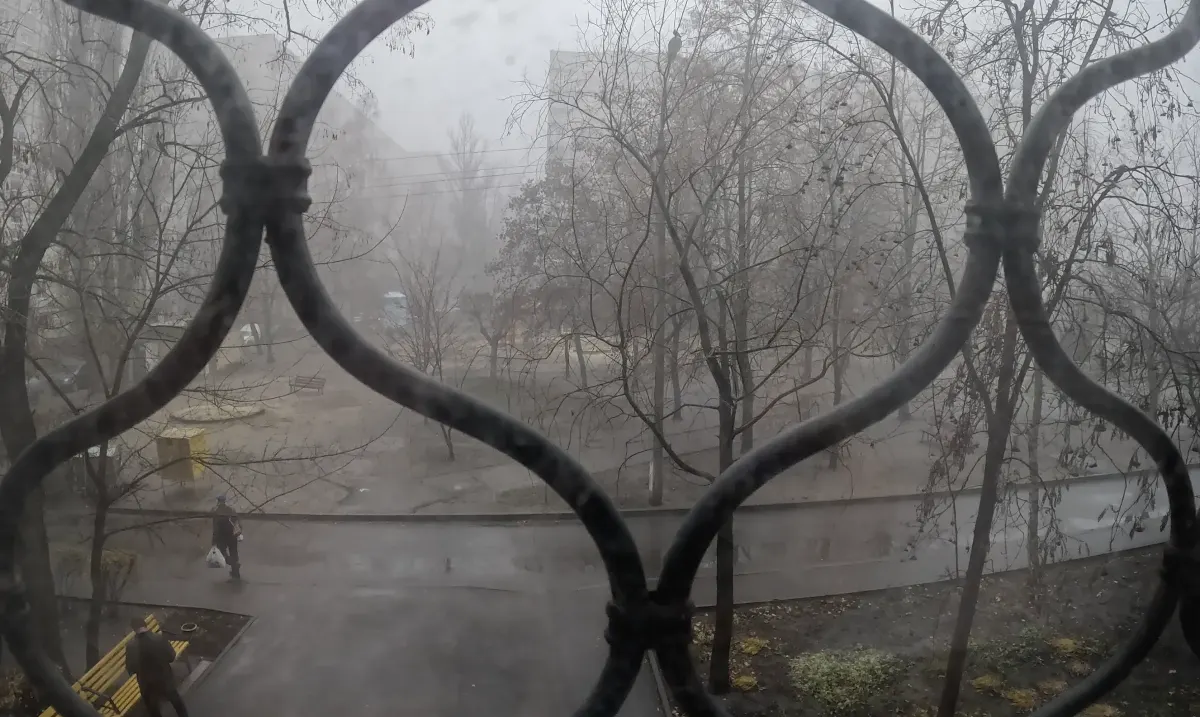
Autumn in Kharkiv
Photo: Matej KautmanBoris whips us up a hipster espresso with his travel coffee maker – a real life hack, and I’m grateful for it. Petrol-station coffee is fine, but every now and then a little treat for the soul goes down well. Especially with a long, exhausting day ahead of us. We’re delivering the last load we’ve brought from Bratislava to eastern Ukraine: supplies for the medics of Frontline Medics – mostly civilian health workers, doctors and paramedics focused on evacuations from the front. Hard work with no end in sight. Boris did a month-long rotation with them at the start of the year, but that’s a story for another blog… maybe someday.
Thanks to a grant from a private company, we’re bringing them some really good stuff: a pile of certified CAT tourniquets², chest seals³, decompression needles, an intraosseous drill with needles, a big box of Israeli bandages, a manual suction pump – in short, solid medical kit worth few thousands euros. Plus a few infusion pumps donated by one of the hospitals in Bratislava.
“We were supposed to go on a trip to Izium. It’ll be a different Izium.”
The original plan was to meet the medics in Izium and hand everything over there. Izium lies near the border of the Donetsk region – or Donbas, if you like – but still belongs to the Kharkiv region. It is sadly known for the front rolling through it twice, and it is one of the most horrifying memorials of this war. The occupying troops left behind a destroyed town, wrecked infrastructure and mass graves full of civilians.
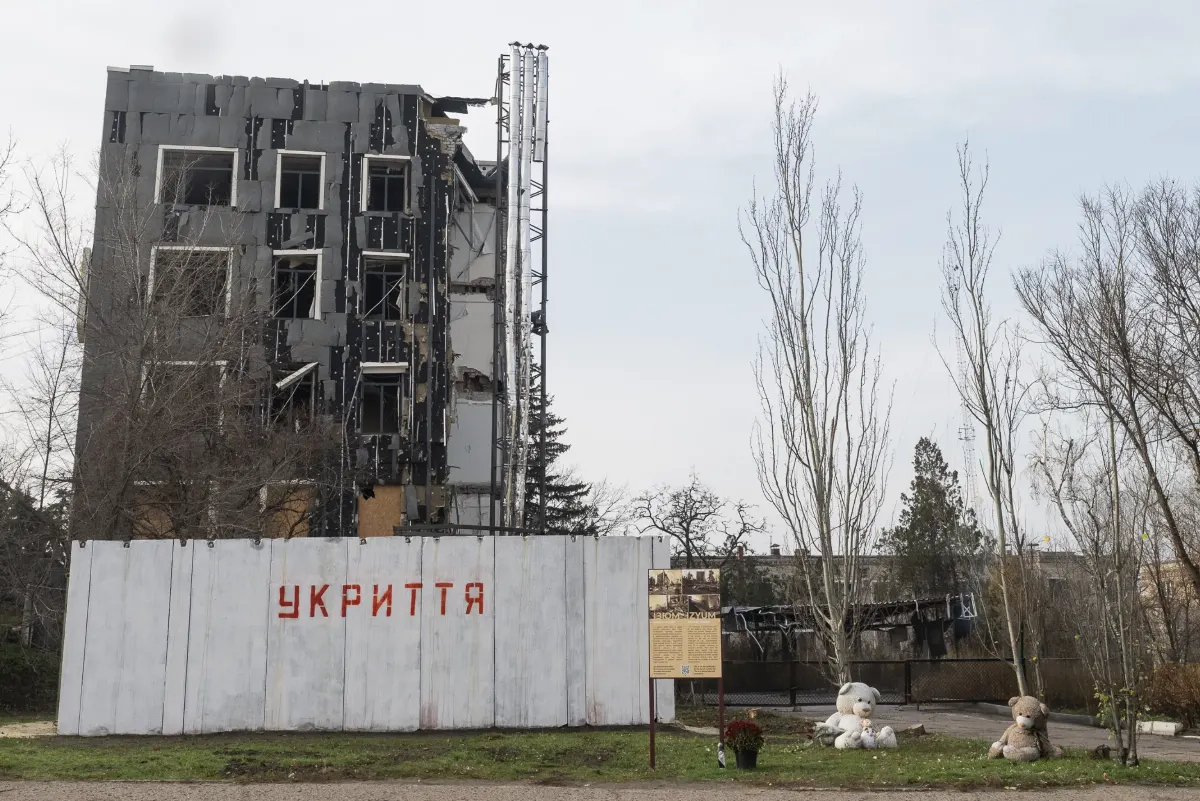
Destroyed buildings, a mobile concrete bunker and a memorial site. Izium
Photo: Matej KautmanIn the morning, after the obligatory oil check on our ageing van, we climb into the cold cab. Boris announces: “We were supposed to go on a trip to Izium. It’ll be a different Izium. It’ll be Kramatorsk.” I laugh nervously, and together we listen to see whether the van will start – it does, off we go.
Last night the medics wrote that they wouldn’t make it to Izium and asked whether we could bring the supplies all the way to Kramatorsk. We agree, even though we had originally wanted to avoid that city. It lies in Donbas, south of Sloviansk. The situation at the front is shifting. The road between Izium and Sloviansk gets more dangerous by the day.
A few months ago, while serving with Frontline Medics, Boris still drove it fairly carefree. The front moves slowly; sometimes it doesn’t move for months. The same can’t be said of FPV drones⁴. Places they couldn’t reach half a year ago, they now fly to routinely. Thanks to technological progress, their range grows by a few kilometres seemingly every month. And so places that used to get “only” missiles and Shaheds are now marked with FPV drone warnings.
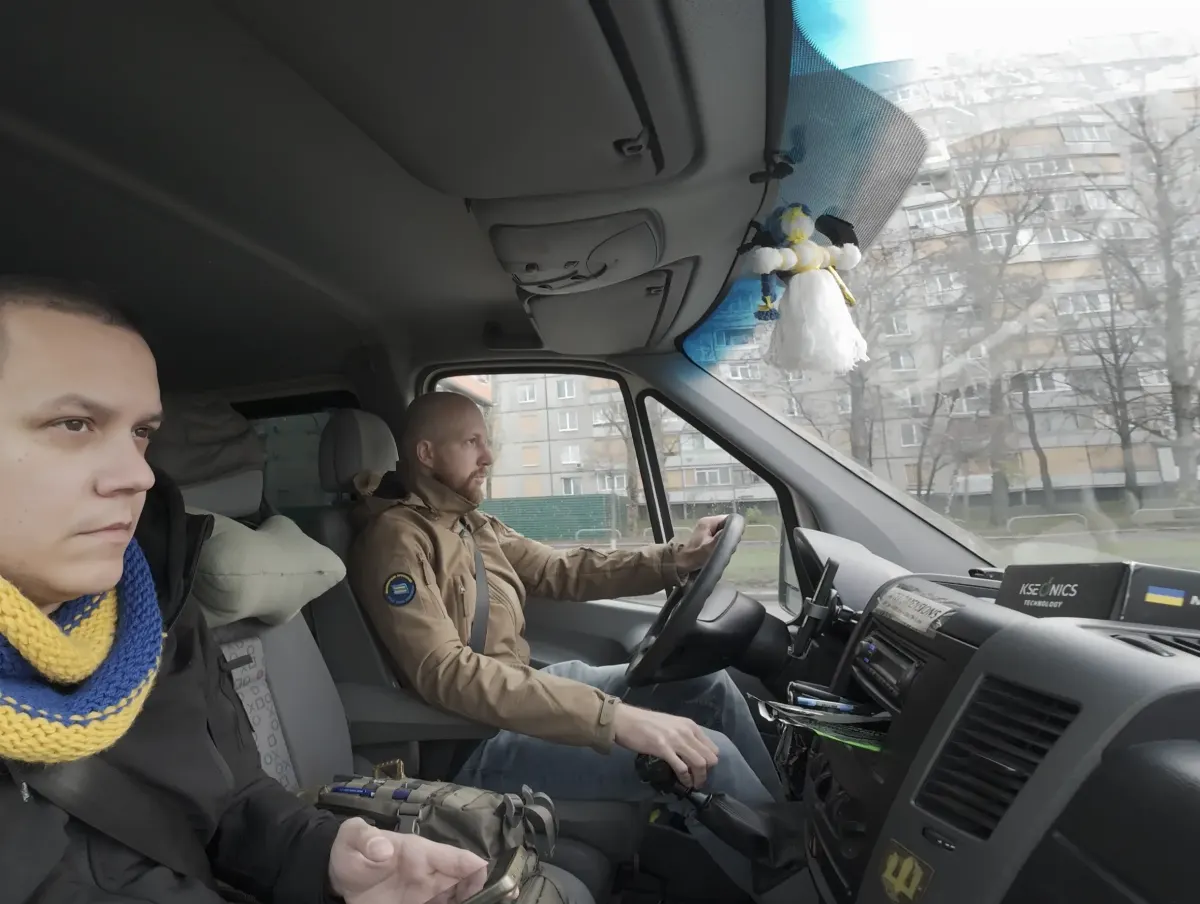
We find our way out of Kharkiv from memory – air defence is jamming GPS again. That way, Russian missiles and Shaheds think they’re somewhere off the coast of Chile. So does our navigation. Luckily this isn’t our first time here, and Boris knows his way around pretty well.
Kharkiv, once a lively city full of traffic jams, feels emptier today. The war has driven out too many people for jams to form anymore. It isn’t a ghost town; life goes on. But the bustling metropolis of eastern Ukraine is now simply a big reinforced-concrete city with many destroyed buildings and wide roads far too big for today’s traffic.
We pass several strategically parked pick-ups with machine guns, waiting for incoming Russian Shaheds. We silently wish them good aim and turn onto the road out of town towards Izium.
The road is long and straight, like most roads in this huge, flat country. On both sides are minefields, marked with inconspicuous white flags on the branches of the bushes lining the road and the occasional sign with a skull and crossbones. Not all the liberated areas have been demined yet, and it will take decades, even after the war.
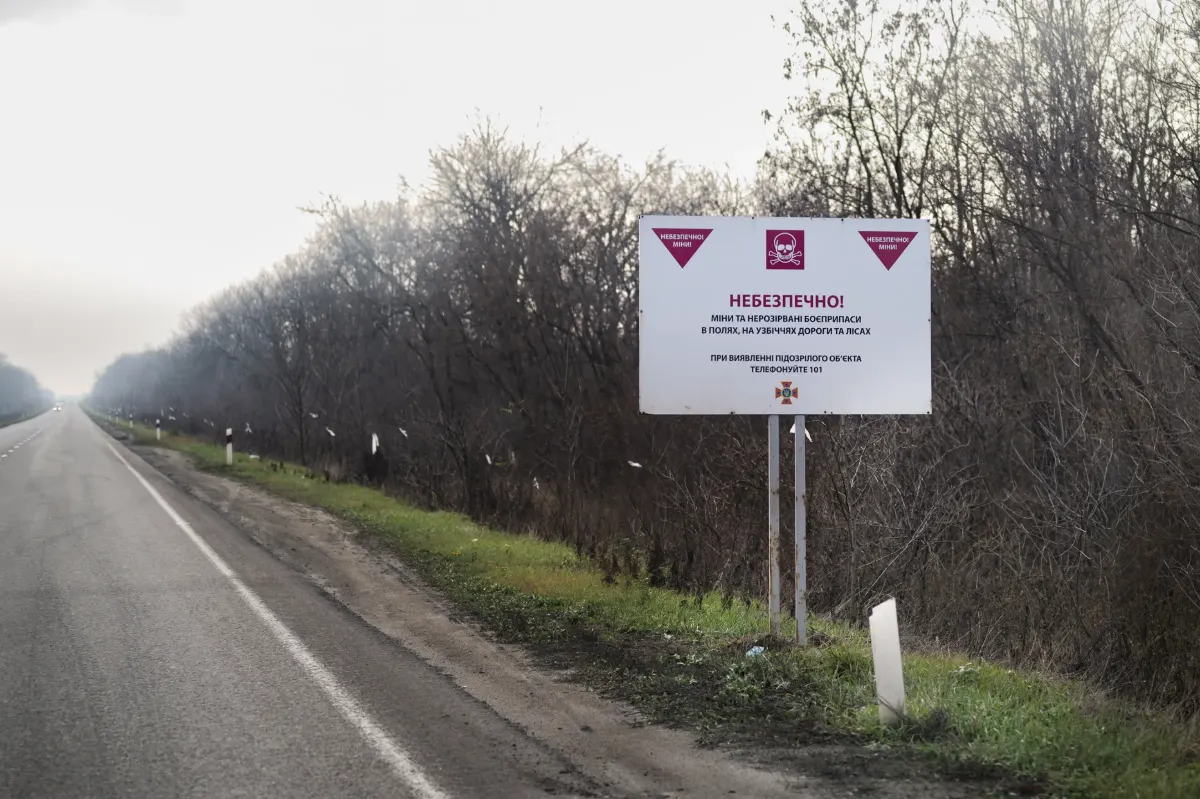
Dozens of kilometres of mined fields and woods. The road between Kharkiv and Izium.
Photo: Matej KautmanWe reach Izium fairly early – after all, it’s only a hundred and twenty kilometres from Kharkiv, which by Ukrainian standards is just around the corner. The badly damaged town looks like a surreal western – or rather, an eastern. The bizarre atmosphere is completed by military vehicles with home-welded cage structures. Cars, trucks, pick-ups and all sorts of mashyny wear this anti-drone “shell” of wire mesh and bars. In the organic stream of cages, civilian cars, pedestrians and our white, smoking van, soldiers on dirt bikes and quad bikes swarm along the muddy, potholed road. They’re probably the best equipped for the roads around here.
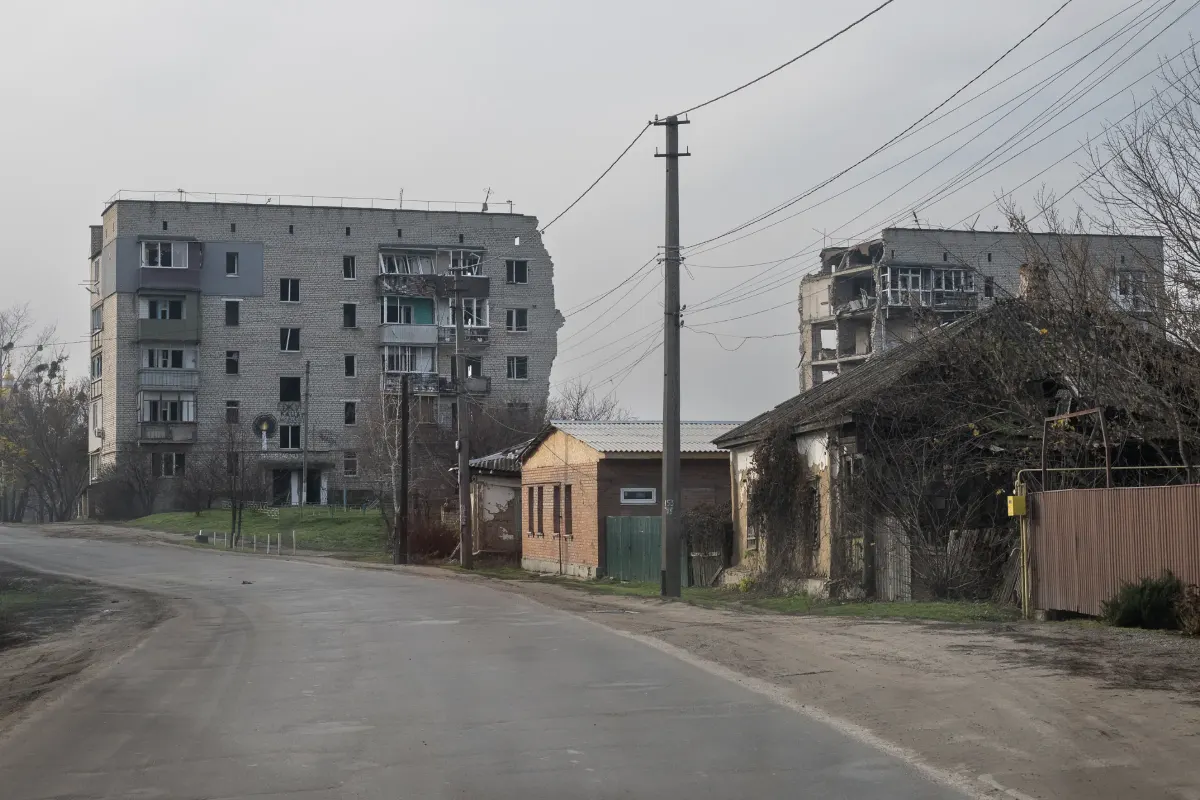
Izium. In March 2022 a Russian aerial bomb hit this building and literally erased a third of it. The Russians killed 44 civilians in this attack.
Photo: Matej Kautman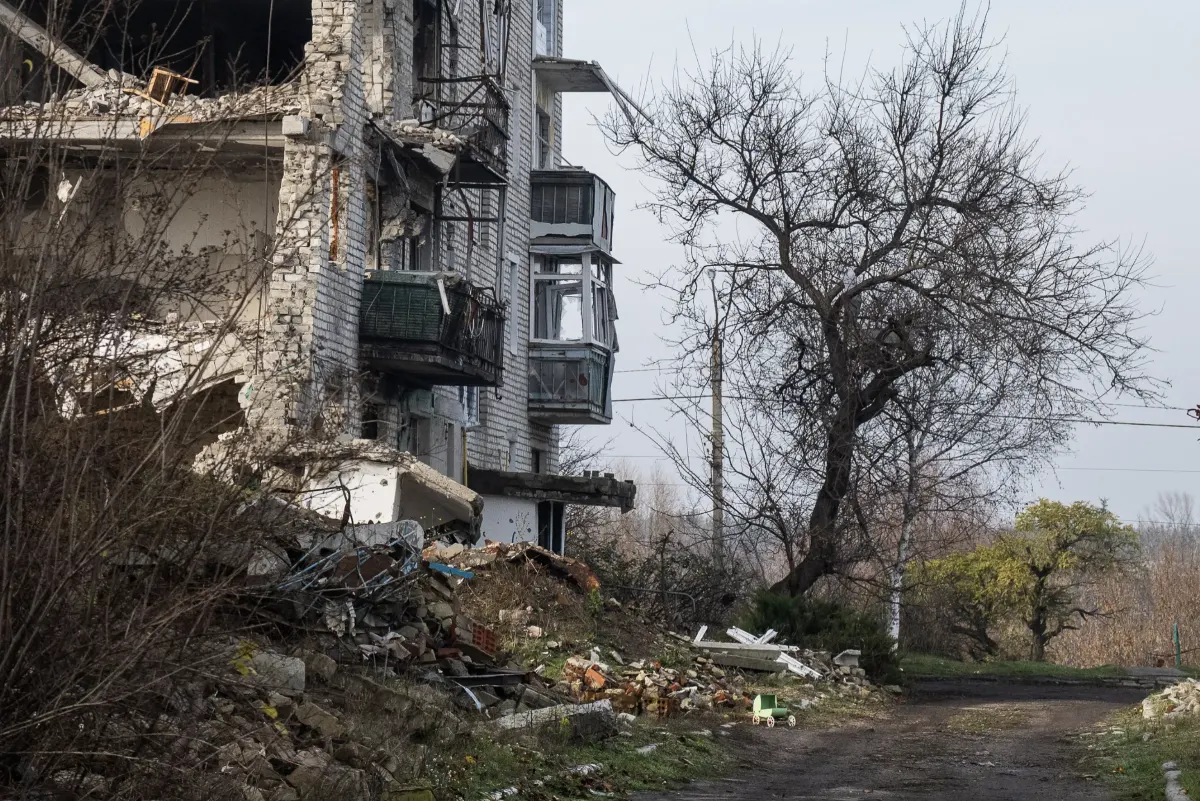
The ruins of the same apartment block in Izium.
Photo: Matej KautmanWe wait. We still don’t have the papers we’ll need to hand the supplies over in Kramatorsk. We had wisely had them sent to Izium, but they haven’t arrived yet, and since we need to get back to Kharkiv before curfew tonight, it’s going to be tight. At the Nova Poshta office we learn they’re already in town, just not at the branch yet. If we wait an hour, they’ll arrive. We push back the meeting in Kramatorsk and head for a coffee at Boris’s favourite café.
“Who’d have thought, four years ago, that Boris would have a favourite café somewhere in eastern Ukraine.”
The little café, which would hold its own among Bratislava’s hipster coffee spots, feels absurd in the middle of this sad wartime reality – these are the Ukrainian contrasts I’ve got used to over three years. My brain still comments on them automatically, though. Over good coffee, amid all that improbability, we bump into a member of Frontline Medics purely by chance. She and Boris recognise each other by the distinctive triangular patches they both wear on their jackets. She’s heading somewhere else, and so are we, so after a short chat she leaves. And so do we – the papers have arrived.
We get into the van and set off towards Sloviansk and Kramatorsk.
“Listen, past Izium that fucked-up doroha starts, we should gear up…” I tell Boris. “Sure, once we’re out of town,” he replies.

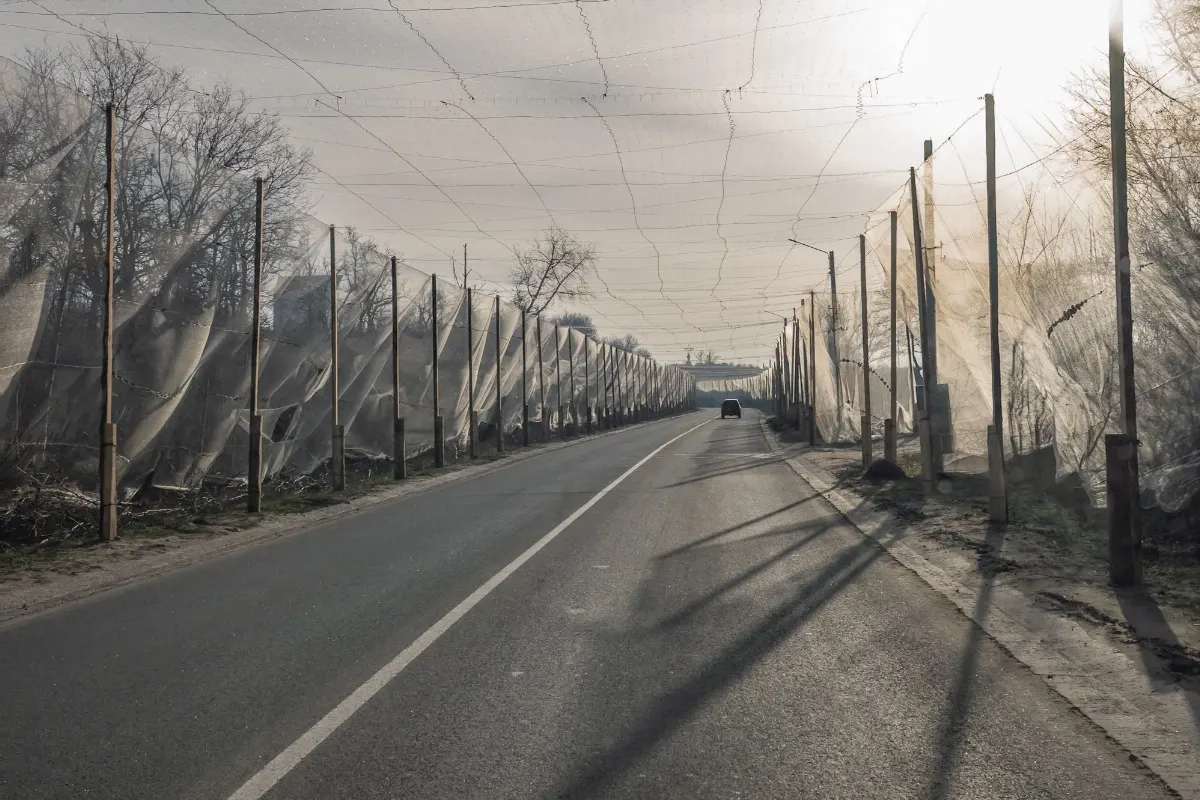
Dozens of kilometres of netted roads in Donbas.
Photo: Matej KautmanRight outside town the anti-drone nets begin. Picture wooden posts every five metres along the road, with old fishing nets stretched between them and over the road. A few hundred metres in, we stop in a tunnel of nets and put on our ballistic vests and helmets. We move the IFAKs⁶ from the back up into the cab, and I set up the drone detectors. Let’s go.
On roads with a high FPV drone threat, you drive a little differently. At least 130 km/h. Ideally 150. Lights off. If the road is exposed and has no nets, weave a bit – if the situation allows. Basically, lower the chance that a drone operator picks you as a target.
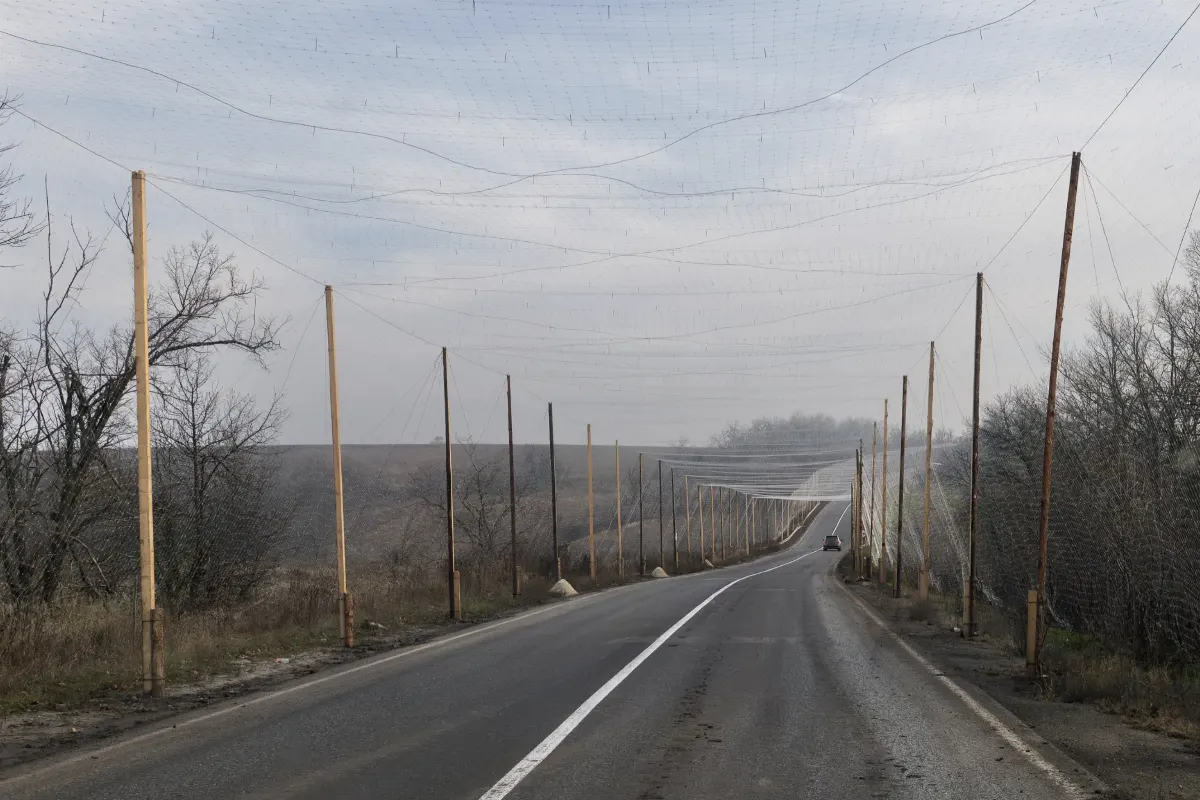
Desiatky kilometrov zasieťovaných ciest na Donbase.
Photo: Matej KautmanThe closer we get to Sloviansk, the more often the detector beeps. But the screen shows nothing but empty static. It’s a science, and sometimes we tell ourselves that the line between the calm of silence and the unease of a picked-up signal is as thin as our trust in these devices.
After a while, a wooden sign leads us off the main road: “Warning! FPV drone danger, this way into town.” Away from the stretch where the most semi-autonomous flying suicide robots with explosives operate, it sends us on a small detour a few kilometres over – so, all chill.

We drive through Sloviansk quickly. “This hotel was still standing the last time I was here,” Boris remarks, adding that the town is visibly more destroyed than half a year ago. Kramatorsk is just past Sloviansk, a few minutes’ drive.

“We’ve opened ten metres to the left.” Sloviansk
Photo: Matej KautmanWe arrive in the hollowed-out town slightly ahead of our meeting with the medics. The atmosphere reminds me of Kherson—in scale and overall look, but above all in the empty streets and roads. The grim reality of frontline towns.
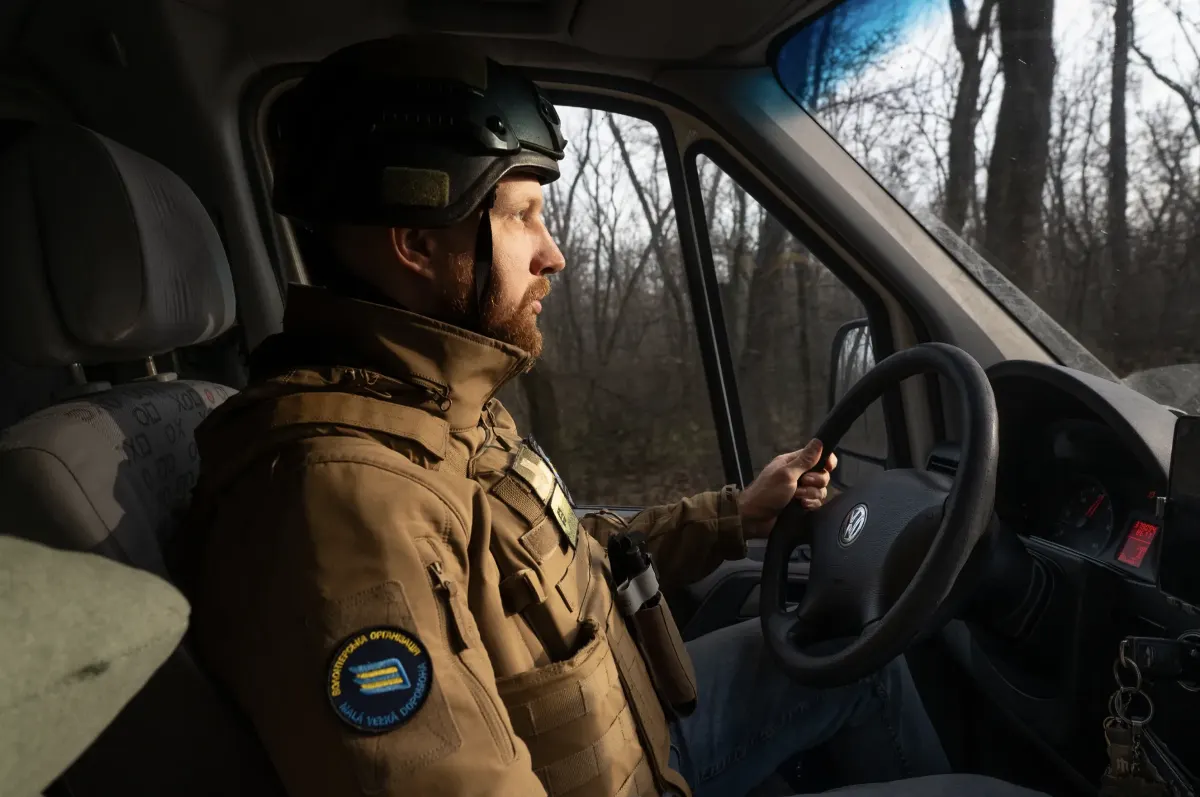
Body armour is used mostly when driving through places heavily infested by FPV drones.
Photo: Matej KautmanThe front is about fifteen to twenty kilometres away, and you can feel it. FPV drones have started flying here too, right into the city, not just onto the strategic roads linking Donbas with the Kharkiv region.
We arrange to meet in a restaurant in Kramatorsk and pass the time waiting for the medics with borscht and pelmeni. “Well, we sure picked a spot for lunch,” Boris says, showing me the battle map on his phone. “True to our good old habits,” I nod, drowning my pelmeni in sour cream.
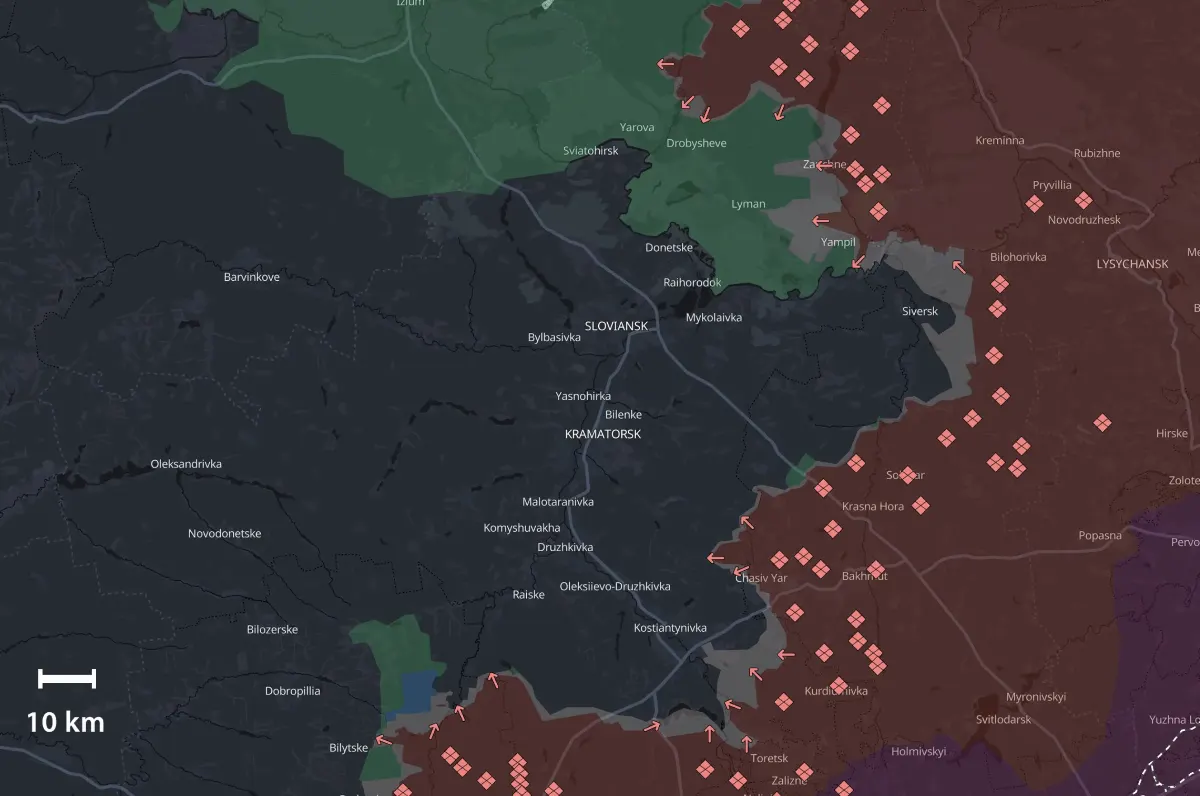
Map of ongoing fighting in north-western Donbas, 23 November 2025.
SourceWe’ve barely finished eating when the Frontline Medics arrive, the two of them. Both Americans – a petite doctor and one of the organisation’s key members, a big guy – they look tired. No wonder. They’re glad we’ve brought the supplies, but you can feel their exhaustion. “You do realise the Russians are trying to get these cities without a fight? That’s because they have no chance of taking them militarily,” the tired guy remarks as we talk about the current situation in Donbas.
We leave the restaurant, get into the van and follow the Frontline Medics and their medychna mashyna with its electronic drone jammers and camouflage nets.
Somewhere among the apartment blocks we shift the supplies from one vehicle to the other. We sign the papers, a stamp here, a stamp there, to keep the bureaucrats happy. We swap our organisations’ patches for our collections – that’s our kind of bureaucracy.
One more short video for the donors. But not here between the apartment blocks – we head to a big, neutral square with a crossroads. Medic teams are a routine target for the Russians, and we don’t want to film on a housing estate and make all the babushkas nervous; they’ve been through enough already.
A final thank-you, a handshake. The sirens start to wail. “We should probably go, stuff lands in the centre here a lot,” one of them says.
The ruins of once-beautiful buildings on the square only confirm it. So we say a quick goodbye and go our separate ways.

The destroyed square. Kramatorsk.
Photo: Matej KautmanIt gets dark early, so we don’t hang around. We’ll take in the sights of Kramatorsk some other time. We still have to get through the tricky stretch between Sloviansk and Izium, ideally with our lights off, without crashing into another unlit car.
I tell Boris I’m glad he’s a good driver as he flies along at 110 km/h on a really narrow two-way road under the nets, somewhere on the edge of Sloviansk. The strange “aesthetic” of the moment is rounded off by a bombed-out factory and a strong signal on the drone detector.
Ten kilometres past Sloviansk it’s properly dark, so drones or no drones, we switch on the lights – but with our foot still to the floor, we race on to Izium. Somewhere in the mud on the edge of town we swap drivers and, exhausted, head back to Kharkiv – for a beer.
Both of us lost in thought. Boris has seen Sloviansk and Kramatorsk again, where he spent a month half a year ago – a lot has changed there, and for the worse. And the tired American’s words keep ringing in our heads.
Meanwhile, Trump is pushing the Ukrainians to hand these cities over to Russia without proper security guarantees.
We delivered what we came to deliver. Nobody got hurt. We should probably be happy…